Finding active insect or rodent evidence inside a home demands an immediate, technically sound response to protect family health and real estate integrity. Virello Pest Management delivers targeted pest control service in Cincinnati with a focus on comprehensive entry denial and diagnostic inspections rather than superficial surface treatments.

A pest control service company in Cincinnati is an environmental management operation that inspects properties, eliminates biological infestations, and seals structural access points to defend residential structures across Hamilton County.
Every service reflects the same meticulous attention to detail, whether it's a single job or a larger pest control sevice project across Cincinnati.
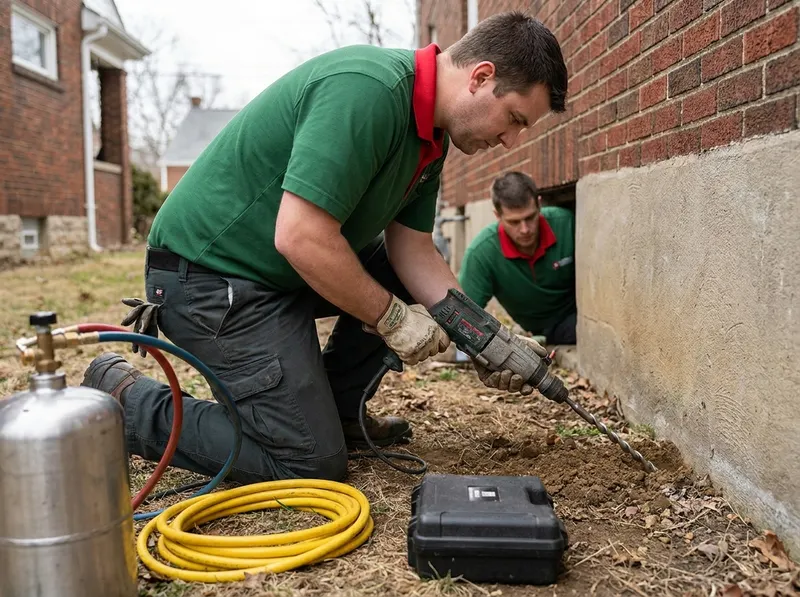
Soil-applied non-repellent termiticide barriers and targeted slab injections address Reticulitermes flavipes colonies attacking structural sills along Hamilton County foundation walls. Protocols follow guidelines established by the Ohio Department of Agriculture Pesticide Licensing division, ensuring termiticides bind with local clay-heavy soil strata without off-target migration. Every treatment isolates active subterranean mud tubes, prevents continuous structural wood consumption, and maintains multi-year perimeter protection around crawlspaces and basements. Field technicians drill through exterior expansion joints, porches, and garage aprons at standardized 12-inch intervals to inject liquid barriers directly down to footer grade depths. Subterranean worker termites walk through these non-detectable liquid zones and unknowingly transfer the active ingredient back to secondary queens residing deep within underground nesting hubs. Follow-up mechanical monitoring includes transparent bait stations positioned every 10 to 15 linear feet across soft mulch perimeters to catch renewed exploratory foraging early.
Get a quote →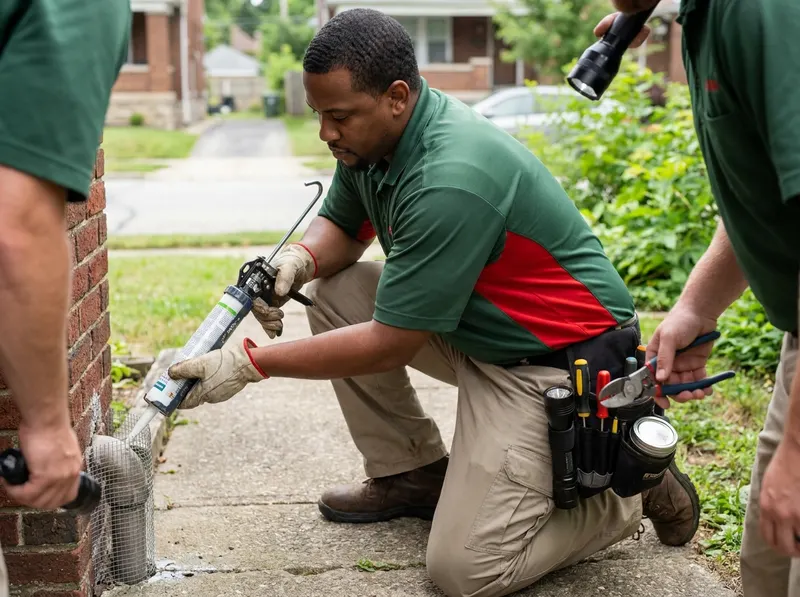
Systematic rodent defense resolves residential infestations of house mice (Mus musculus) and Norway rats (Rattus norvegicus) common to older stone foundations and dense utility corridors. Technicians locate rub marks, gnaw patterns, and sub-floor runways, integrating containment measures referenced by the Centers for Disease Control Rodent Prevention protocols. Complete mechanical exclusion seals foundation openings, crawl vents, and pipe penetrations with rust-proof hardware cloth and escutcheon plates down to one-quarter inch. Interior snap-trap arrays placed within crawlspaces, drop ceilings, and attic catwalks eliminate trapped populations without introducing odor-causing rodenticide baits indoors. Technicians audit electrical lines, plumbing entries, and garage door bottom seals to prevent recurring seasonal migrations driven by dropping autumn temperatures. Physical entry barriers stop rodents from chewing through vital Romex electrical lines and contaminating fibrous fiberglass batt insulation with harmful urine and fecal pathogen trails.
Get a quote →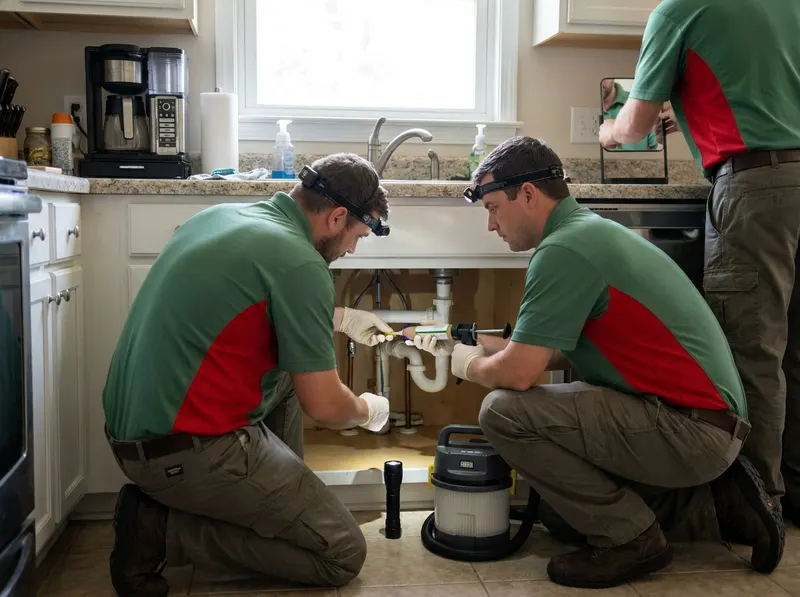
Intensive cockroach elimination neutralizes Blattella germanica populations harboring inside kitchen cabinetry, motor housings, and utility chases. Utilizing insect growth regulators, micro-encapsulated concentrates, and targeted bait matrixes based on principles outlined by the US EPA Integrated Pest Management standards, treatments interrupt life-cycle reproduction. Technicians extract nesting aggregates from hidden wall voids to eliminate allergen-inducing fecal deposits and food supply contamination. Specialized vacuum systems equipped with sealed HEPA filters capture living nymphs and gravid females from refrigerator compressor compartments and under-counter hinge recesses. Non-repellent active baits are strategically micro-dotted inside void spaces to exploit natural cannibalistic foraging behaviors, ensuring deep colony collapse. Routine follow-up inspections monitor insect adhesive traps to verify zero egg-case emergence before certifying a complete cleanout across food prep zones.
Get a quote →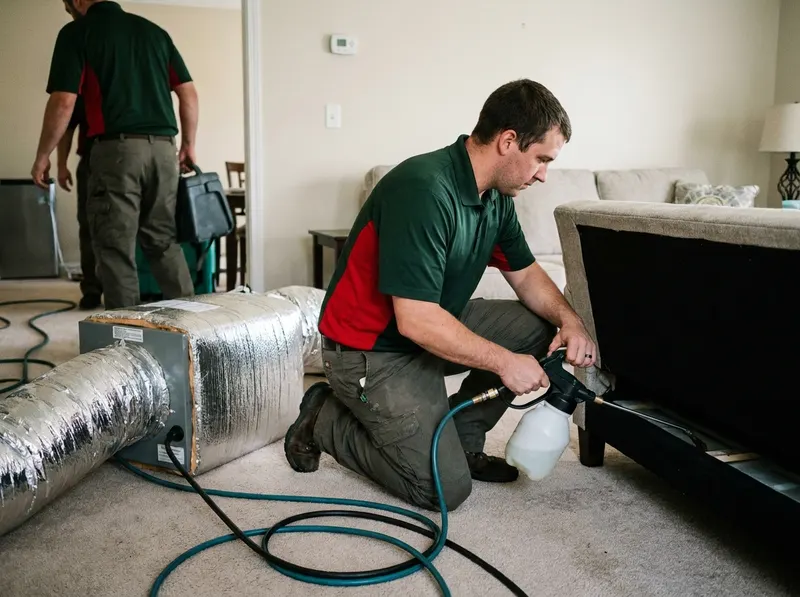
Remediation protocols target Cimex lectularius colonies nesting within mattress seams, baseboard channels, and bedroom wall outlets. Technicians apply targeted residual applications, non-toxic desiccant dusts, and directional heat spot applications aligned with technical standards from the Pest Control Technology Technical Library . Detailed room-by-room preparation sheets outline specific laundry and clearing procedures, restoring sleep hygiene without lingering odors or airborne residues. High-output systemic steam probes penetrate tufts, box spring folds, and upholstered headboard joints at temperatures exceeding 180 degrees Fahrenheit, instantly eliminating egg clusters on contact. Long-lasting amorphous silica gel dust is injected behind faceplates and floor moldings to form a dry, electro-statically charged barrier that dehydrates wandering bed bugs over extended incubation periods. Passive interceptor monitors under furniture legs confirm that nighttime feeding routes remain completely disrupted post-treatment.
Get a quote →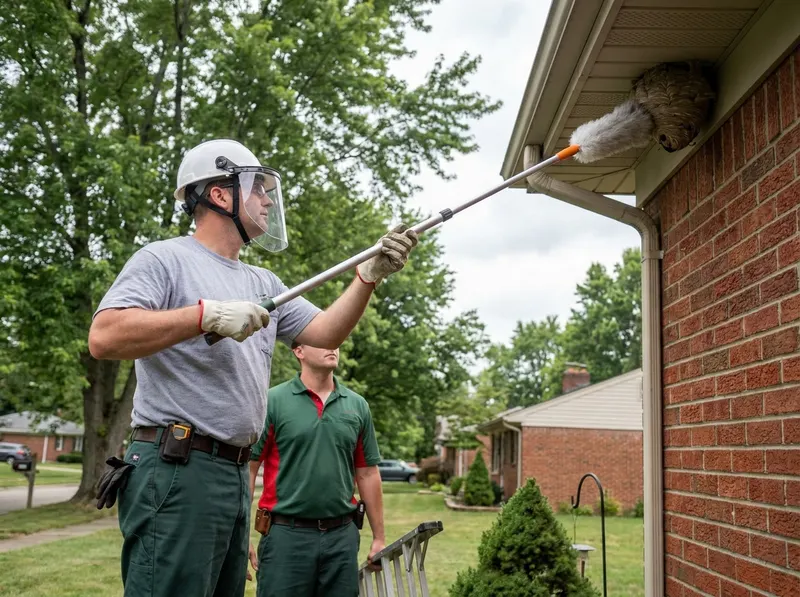
Elimination of paper wasps, bald-faced hornets, and ground-nesting yellow jackets protects outdoor living zones and building entrances. Field crews deploy extension applicators reaching overhangs, gutters, and roof peaks up to 30 feet high, following recommendations from the Ohio State University Extension entomology database. High-reach equipment safely treats and removes elevated paper nests, void-nesting yellow jacket hives, and protective carpenter bee galleries. Pressurized micro-emulsion sprays freeze protective colony defenders instantly, neutralizing flight capabilities before workers can coordinate defensive swarming against residents. Sub-surface yellow jacket hives found along retaining walls or decorative landscape timbers receive precision non-repellent dust injections that track deep into underground nesting chambers. Architectural soffit gaps where wasps continuously anchor aerial hives are systematically treated and sealed to discourage summer recolonization.
Get a quote →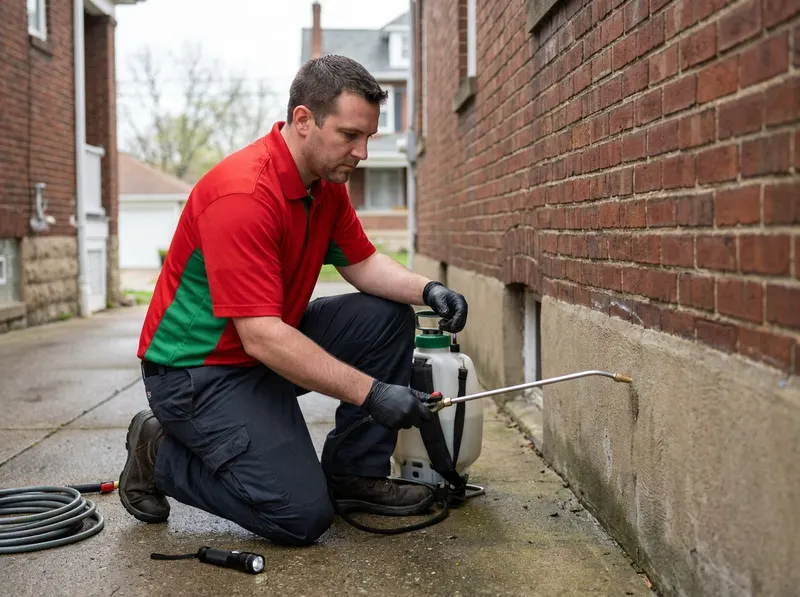
Comprehensive exterior perimeter applications deter centipedes, millipedes, earwigs, and field crickets driven indoors by heavy Ohio River valley humidity. Formulations are selected using data from the National Pesticide Information Center to target the transition line between foundational limestone, soil grades, and porch footings. Liquid barriers penetrate ground mulches and pea gravel beds to stop invasive crawling pests before they breach weatherstripping or basement window wells. Technicians band a three-foot upward foundation spray and a five-foot outward horizontal ground perimeter around the entire building envelope to halt multi-legged arthropods. Granular water-activated barriers are laid along exterior landscape lines to establish a continuous defensive perimeter across exterior patio joints. Weep holes and ground-level utility penetrations receive fine mineral dust coatings that dry out soft-bodied insects seeking subterranean shelter during dry summer spells.
Get a quote →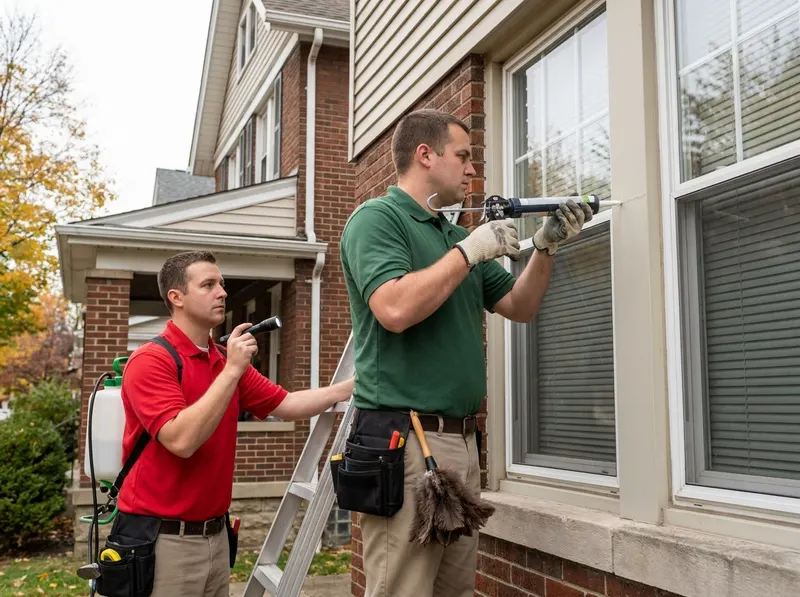
Autumn preventative barriers target brown marmorated stink bugs and boxelder insects aggregating along warm western and southern siding exposures. Exclusion materials follow building science practices referenced by the US Department of Energy Air Sealing standards to prevent overwintering drafts and pest harbors simultaneously. Technicians treat exterior trim, soffit seams, and attic vents before insects retreat into wall cavities for winter hibernation. Fast-acting residual contact treatments coat sun-warmed vinyl, cedar, and fiber-cement cladding during peak migration weeks from September through early November. Technicians apply silicone elastomeric sealants around attic louver screens, window casings, and utility penetrations to close mechanical gaps down to one-eighth inch. Sealing high exterior envelope gaps eliminates that sudden spring emergence where trapped insects stumble out into upper bedrooms, home offices, and living areas.
Get a quote →Perimeter yard and transition-zone treatments control populations of blacklegged ticks and cat fleas carried across property lines by suburban wildlife. Applications adhere to structural and environmental guidelines verified by the VectorBase Biological Resource Center , targeting shaded lawn margins, leaf litter accumulations, and tall turf runs. Systematic disruption of developmental cycles drastically reduces residential exposure risks for households with outdoor pets. Specialized low-pressure mist blowers deliver combination adulticide and juvenile hormone mixtures directly beneath low-hanging ornamental shrubs, cedar mulch beds, and wooden deck substructures. Technicians address ground resting sites frequented by urban raccoons, opossums, and stray animals to halt the flea pupal stage. Coordinated yard management guidance instructs property owners on mowing protocols, humidity mitigation, and debris clearance to keep tick questing zones away from family play spaces.
Get a quote →You get a firm, itemized quote for your pest control sevice before any work begins, no surprises, no pressure.
Careful prep, tidy work, and a full cleanup when we are done. We treat your home and belongings like our own.
The same trusted, background-checked team from the first call to the final check.
Cincinnati residential structures vary widely by architectural era, demanding distinct technical strategies based on property layout and infestation type. If an older brick home in Mount Adams or Clifton shows signs of seasonal mouse activity or bat entry along roof junctions, structural exclusion paired with physical pathway sealing provides permanent relief, whereas relying strictly on localized rodent bait stations leaves attic voids vulnerable to continuous reinvasion. If a suburban property in Hyde Park or Mount Lookout experiences active subterranean termite activity near limestone foundations, liquid non-repellent soil barriers combined with direct perimeter trenching establish uninterrupted boundary defense, whereas surface-level wood sprays leave underground worker galleries untouched.
If stinging insects construct paper nests beneath high eaves and fascia, hydraulic pole dusting and micro-encapsulated treatments reaching up to 30 feet eliminate high-elevation colonies, whereas standard ground-level baseboard treatments leave overhead entry points exposed. The functional trade-off between exterior perimeter defense and intensive interior remediation centers on access and containment: exterior barrier applications maintain yard protection without disrupting daily household routines, while deep interior remediation for bed bugs or German cockroaches necessitates localized prep work and specific re-entry windows to achieve total eradication. Selecting whole-structure mechanical exclusion requires an initial investment in exterior carpentry and specialized materials, but it permanently eliminates the ongoing chemical replenishment cycles demanded by basic exterior pesticide curtains.
Every project gets a firm, written price after an on-site visit. Ranges below for orientation.
Tell us about your pest control sevice job and we'll send a clear, written quote, usually the same day. Or just call and talk to a real Cincinnati pro.
(513) 812-8088
Cincinnati properties face unique structural vulnerabilities due to the region's sharp hillsides, dense river basin humidity, and historical housing stock. Historic masonry structures in Over-the-Rhine and Clifton often feature fractured stone foundations that allow subterranean rodents and damp-wood insects direct subterranean access. Meanwhile, heavily forested residential bluffs near Ault Park and Eden Park foster dense canopy conditions where carpenter ants and stinging insects drop onto high-elevation trim boards, necessitating 30-foot vertical treatments to defend rooflines. In neighborhoods like Northside and College Hill, older box gutters and settling balloon-frame architecture produce slight settling gaps between the sill plate and foundation stone. These structural gaps allow Norway rats and field mice to navigate directly from clay hillsides into interior basement channels during seasonal wet weather transitions. Along the limestone terrace cuts near Mount Lookout and Hyde Park, shifting clay soils generate micro-fractures in foundation coatings, providing subterranean termites direct highway pathways toward structural ground-floor floor joists. Managing pest pressure in Hamilton County requires addressing these architectural realities rather than relying solely on generic chemical ground sprays.
 Virello Pest Management