Overwintering insect behavior in southwestern Ohio follows strict thermal triggers. When ambient daytime temperatures decline in late September and October, brown marmorated stink bugs ( USDA National Invasive Species…
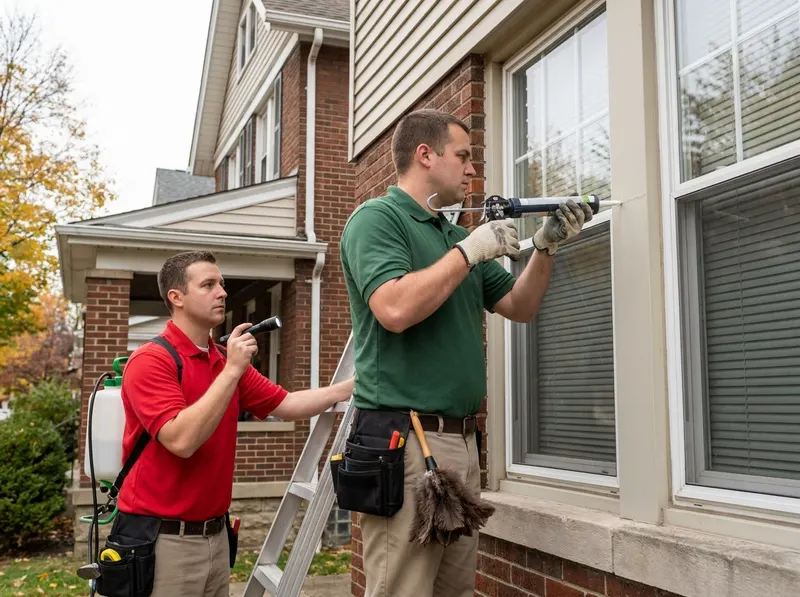
Overwintering insect behavior in southwestern Ohio follows strict thermal triggers. When ambient daytime temperatures decline in late September and October, brown marmorated stink bugs (USDA National Invasive Species Information Center) and boxelder bugs congregate on sun-warmed southern and western exposures of homes. These pests exploit exterior gaps as narrow as 3 millimeters around window casings, mortar joints, rooflines, and weep holes. Once inside the wall envelope, they enter diapause, a state of dormant arrest, until residential heating systems or spring weather trickles warmth into wall voids, causing them to emerge directly into bedrooms and living spaces. Hardware-store aerosol foggers fail because they contact only exposed surfaces, leaving the dormant harborage populations safely inside structural cavities while depositing airborne residues across indoor surfaces.
Effective defense requires an exclusion-first protocol rather than broad-spectrum indoor chemical saturation. In historic masonry neighborhoods such as Over-the-Rhine and Mount Adams, settlement cracks and aging lime mortar provide direct paths into framing. In classic wood and vinyl-sided structures common to Clifton, Northside, and College Hill, insects penetrate behind siding seams and soffit intersections. Virello Pest Management implements diagnostic physical exclusion: technicians inspect structural transitions, pack high-risk voids with elastomeric sealants, and install copper mesh or woven screening over exterior penetrations to secure physical barriers according to EPA Integrated Pest Management principles.
Following physical sealing, technicians apply a micro-encapsulated pyrethroid formulation to critical landing points, soffits, fascia boards, and window headers. These treatments adhere to brick, vinyl, fiber cement, and aluminum siding, remaining stable through fall rainfall in accordance with label guidelines from the Ohio Department of Agriculture Pesticide Regulation. The barrier intercepts congregating insects before they locate interior entry points, avoiding the unpleasant odor caused by defensive compound secretions when bugs are handled or crushed indoors.
Properties in wooded pockets near Mount Lookout, Hyde Park, Oakley, and Pleasant Ridge experience higher baseline pest pressure due to adjacent host foliage, including boxelder, female ash, and non-native tree of heaven stands monitored by the ODNR Division of Forestry. Routine landscape clearing and physical exclusion provide systemic protection. Homeowners with questions regarding seasonal structural prep can call (513) 812-8088.
Every job gets a firm, written price after an on-site visit.
Tell us about your stink bug and boxelder bug winterization job in Cincinnati and we'll send a clear, written quote, usually the same day.
 Virello Pest Management